
Executive privilege has always rested on one simple idea: a president needs room to get honest advice from people who work for him without every conversation ending up in a congressional file. A new Justice Department opinion just extended that shield to people who don't work for him at all.
OLC defined "private advisers" broadly enough to sweep in, in the opinion's own words, "members of the public, state officials, or employees of other branches of the federal government." A call with a corporate executive, a conversation with a lobbyist, a chat with an old business friend who weighs in on policy, under this theory, all of it could be shielded from Congress and the courts once the White House frames the exchange as part of presidential decision making. The opinion arrived the day after Todd Blanche was sworn in as attorney general, though his name isn't attached to it.
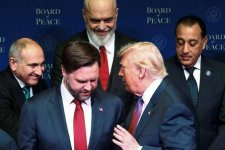
This isn't theoretical. The opinion has already surfaced in a live fight: DOJ has cited it while resisting a subpoena from the American Bar Association seeking records tied to Boris Epshteyn, Trump's senior personal counsel, in connection with the administration's 2025 crackdown on law firms. The department has gone so far as to decline to confirm or deny whether Trump received advice from Epshteyn at all in that matter. Attorney and former OLC official Jonathan Shaub has described the opinion as potentially "a pretty significant weapon" for deflecting congressional investigations into private parties connected to Trump.
Trump governs more through personal relationships with outside figures than most of his predecessors. He calls people he trusts, regardless of their title. A privilege built to protect deliberations among Cabinet officials was never designed to stretch over that governing style. Doing so risks shielding the president's private arrangements with outsiders rather than the internal workings of government itself.
It's a legal doctrine, rooted in United States v. Nixon, that lets a president withhold certain confidential communications from Congress and the courts to protect candid internal deliberation.
Who does the new OLC opinion cover?
Potentially anyone outside the executive branch the president or his direct advisers communicate with, including private citizens, lobbyists, business contacts, and even state officials, as long as the talk relates to presidential decision making and stayed confidential.
Has the opinion been tested in court?
Not yet. DOJ has invoked it in the ABA's subpoena fight over Boris Epshteyn, but no court has ruled on whether the theory holds up.
Can Congress still get this information?
Only by showing the requested material is "demonstrably critical" to its oversight function, a high bar that gives the administration substantial room to resist disclosure.
What the New DOJ Opinion Actually Says
On August 10, 2026, the Justice Department's Office of Legal Counsel released a 21 page opinion, "Applicability of Executive Privilege to Presidential Communications with Private Advisers," arguing that a president's conversations with private citizens, people who hold no government job and answer to no one in the chain of command, can qualify for executive privilege. Grounding its reasoning in the Supreme Court's 1974 decision in United States v. Nixon, OLC laid out three conditions: the communication has to relate to official presidential decision making, it has to involve or reflect communications with the president or his direct advisers, and it has to be confidential.OLC defined "private advisers" broadly enough to sweep in, in the opinion's own words, "members of the public, state officials, or employees of other branches of the federal government." A call with a corporate executive, a conversation with a lobbyist, a chat with an old business friend who weighs in on policy, under this theory, all of it could be shielded from Congress and the courts once the White House frames the exchange as part of presidential decision making. The opinion arrived the day after Todd Blanche was sworn in as attorney general, though his name isn't attached to it.
The Legal Foundation Is Thin
DOJ's main precedent is a 2007 memo from then Attorney General Paul Clement, which floated extending privilege to a narrow category of outsiders: senators involved in confirming U.S. attorneys. That's a long way from covering any private citizen with no government role. Legal commentators have called the move a significant break from decades of precedent that limited the privilege to the president and his immediate staff, and analysts writing for Lawfare have described the opinion as resting on a strained reading of that history. Under OLC's new framework, Congress can only overcome an asserted privilege by showing the information is "demonstrably critical" to its work, a notably high bar.Why the Timing Matters
Democrats are favored to retake the House this November, which would restore subpoena power to a chamber of Congress for the first time in years. A privilege doctrine this elastic would let the administration wave off document requests and testimony demands on an entire category of outside influence right as oversight is about to intensify.This isn't theoretical. The opinion has already surfaced in a live fight: DOJ has cited it while resisting a subpoena from the American Bar Association seeking records tied to Boris Epshteyn, Trump's senior personal counsel, in connection with the administration's 2025 crackdown on law firms. The department has gone so far as to decline to confirm or deny whether Trump received advice from Epshteyn at all in that matter. Attorney and former OLC official Jonathan Shaub has described the opinion as potentially "a pretty significant weapon" for deflecting congressional investigations into private parties connected to Trump.
Congress Is Already Pushing Back
On August 26, 2026, Senators Adam Schiff, Chuck Schumer, Dick Durbin, and Mazie Hirono sent a letter to the White House Counsel's Office demanding the identities, employers, and titles of anyone the administration considers covered by the new privilege standard, along with all internal communications about the opinion. They set a September 4, 2026 deadline for a response. The senators noted the opinion follows a similar pattern to an April 2026 OLC opinion on the Presidential Records Act that a federal judge has already enjoined, suggesting, in their view, a broader effort to wall off presidential communications from oversight rather than a response to any genuine legal dispute.Why Critics Say It Invites Corruption
The opinion argues that private advisers, without a guarantee of confidentiality, might hesitate to speak freely out of "concern about appearances." That reasoning is exactly what troubles watchdog groups. Concern about appearances isn't a flaw in the system, it's the system working. When someone with no government role is quietly advising a president, the public benefits from that person having to think twice about how it looks. Remove that pressure and you haven't improved the quality of advice; you've removed the one thing standing between informal influence and undisclosed deal making. Scott Amey, general counsel for the Project on Government Oversight, has pointed to the opinion as part of a broader pattern of the administration curbing transparency.Trump governs more through personal relationships with outside figures than most of his predecessors. He calls people he trusts, regardless of their title. A privilege built to protect deliberations among Cabinet officials was never designed to stretch over that governing style. Doing so risks shielding the president's private arrangements with outsiders rather than the internal workings of government itself.
Trump's Track Record With Executive Privilege
This isn't new territory for the administration. Trump has previously invoked executive privilege to fight release of the full Mueller report and to block information tied to the January 6 Capitol attack. A federal appeals court recently upheld the criminal conviction of Peter Navarro, one of Trump's former trade advisers, for defying a congressional subpoena connected to the January 6 investigation. Those fights carried consequences even when the underlying privilege claims eventually collapsed in court.What Happens Next
None of this takes effect automatically. It's a legal argument the administration can invoke the next time Congress or a judge comes asking questions, and it still has to survive judicial review, far from guaranteed given how far it departs from the doctrine's history. But the practical effect doesn't wait for a ruling. The moment the opinion became public, it signaled to anyone hoping to influence this White House off the books that an informal conversation, without a title or disclosure requirement attached, might stay buried indefinitely.FAQ
What is executive privilege?It's a legal doctrine, rooted in United States v. Nixon, that lets a president withhold certain confidential communications from Congress and the courts to protect candid internal deliberation.
Who does the new OLC opinion cover?
Potentially anyone outside the executive branch the president or his direct advisers communicate with, including private citizens, lobbyists, business contacts, and even state officials, as long as the talk relates to presidential decision making and stayed confidential.
Has the opinion been tested in court?
Not yet. DOJ has invoked it in the ABA's subpoena fight over Boris Epshteyn, but no court has ruled on whether the theory holds up.
Can Congress still get this information?
Only by showing the requested material is "demonstrably critical" to its oversight function, a high bar that gives the administration substantial room to resist disclosure.
Last edited: